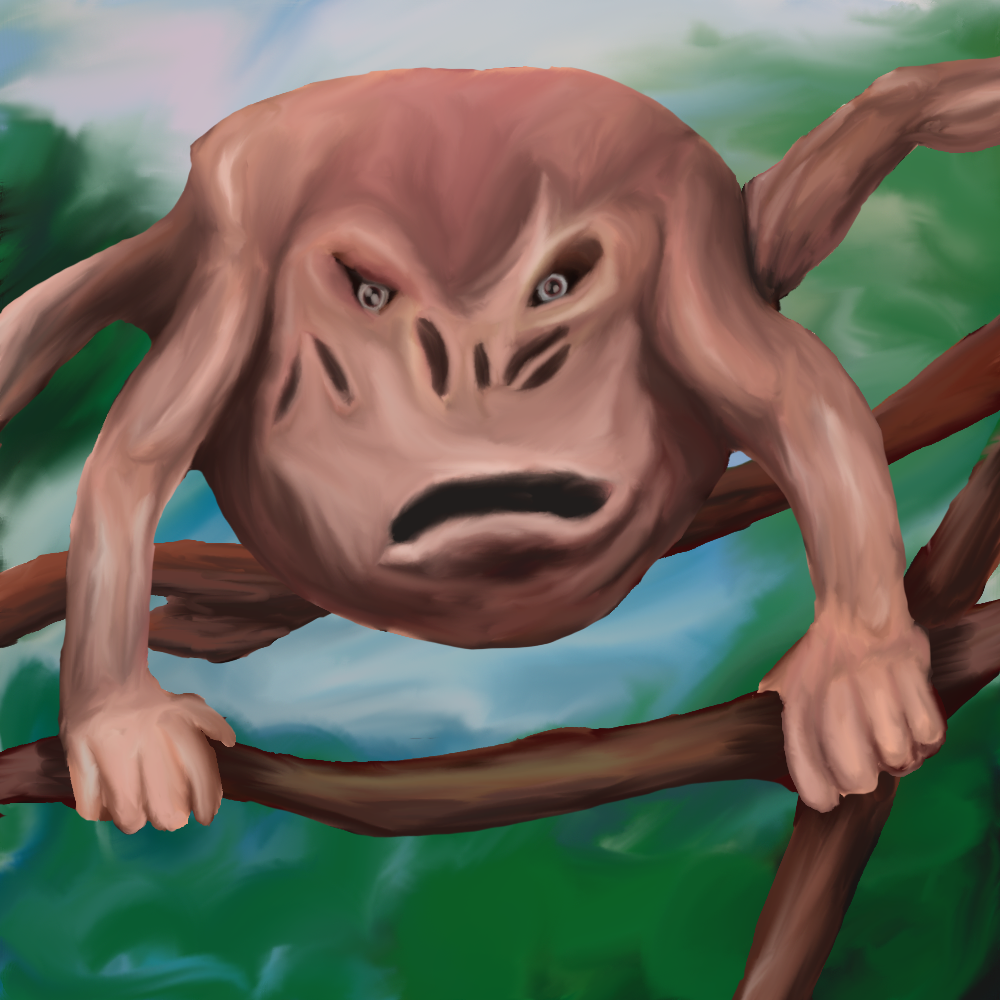
Mudcows
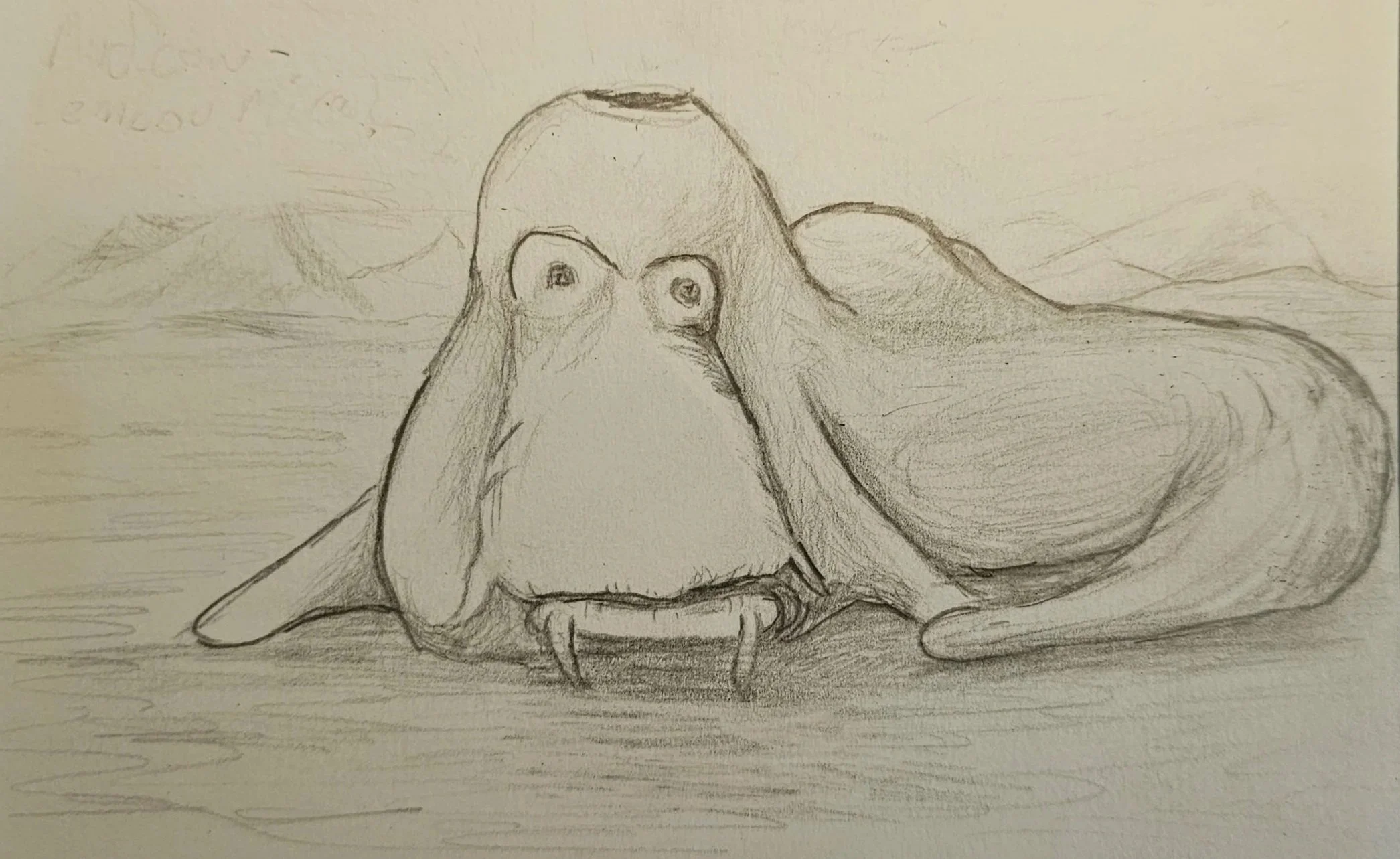
Heifer Mudcow, Winters’ Mudflats 1894
It was worth the trouble of hauling the skiff up and over that last ridge of hills, we managed to make it several miles down-river, deep enough to get a proper look at those rosy blobs we've been seeing across the plateau. Their size is immense, larger than a rhinoceros by far, although I couldn't make an estimation of their weight.
Francis spotted the beast, after one of our guides from Malacca pointed it out, the great creature was submerged up to its hump in the mud, with only the blow hole poking out the top of the liquid, although once it became aware of us it poked its head up to take a look. The creature appears to have the ability to sink and submerge at will, perhaps there is some form of swim-bladder allowing them to alter their density. Remarkable to say the least, and in any case, simply awesome to see such a creature of such scale emerge from such inconspicuous loam.
Wints and I have decided that they must be eating something in the mud, as there isn't a shred of greenery as far as the eye can see, nor any other animals. Our guides are to bring back buckets of mud and sift through looking for lifeforms. Des is out hunting for mudwalkers again, as we've lost our appetite for these accursed tropical fish, and have found that they are far better boiled than braised. I've taken note of the location to return with appropriate armaments, as it'll take an elephant gun to put a bull that size on my plate.
I've taken to speaking with one of our guides named Bagus, a very lively fellow. The moment the creature arose from the mud he screamed "Lambou Mira! Lambou Mira!" in absolute terror. It took some time to decipher his ravings, but from the reactions of the other guides, and what I can piece together, "Lamou Mira" is "Big Cow" or "Pink Cow" or some such in his own language, and the fool is petrified of cows. It's made for a fantastic day of shouting "Lambou Mira" at pink humps, watching the great beasts emerge, and watching Bagus fall around in abject terror. A fitting name perhaps, although I could see the society taking some chagrin at an Austronesian name…